
Food Safety Practices
Washing, prepping, cooking and storing food are all involved in practicing food safety. Avoid the potential of getting ill from food by following these guidelines.
By Kristen Howard MS, RD, LD
According to the Food and Drug Administration, foodborne illness, also called food poisoning, is defined as any sickness that results from eating or drinking contaminated food or water.
Main causes of food poisoning at home come from dirty hands, bacteria and poor food storage. While other causes exist, practicing food safety at home can prevent food poisoning from happening to you, a loved one or guest.
The four main components of food safety include proper ways to wash, prep, cook, and store beverages and food. It’s important to remember that sanitation practices in the kitchen are involved in every step of the process.
WASHING
All food handlers should thoroughly wash their hands with soap and hot water before and after handling food. Gloves are not a replacement for handwashing. Also, clean surfaces and tools before and after using them to remove any germs and to prevent contamination.
Certain foods do not need to be washed before preparation. Some common examples include raw meats, like chicken, fish and beef. Washing raw meat should be avoided as this can spread bacteria, like salmonella around the kitchen. Store-bought eggs should also not be washed to prevent the removal of the protective coating applied to eggs during processing. However, farm-fresh eggs should be washed before cooking to remove bacteria and dirt that could move to your hands, utensils and other surfaces.
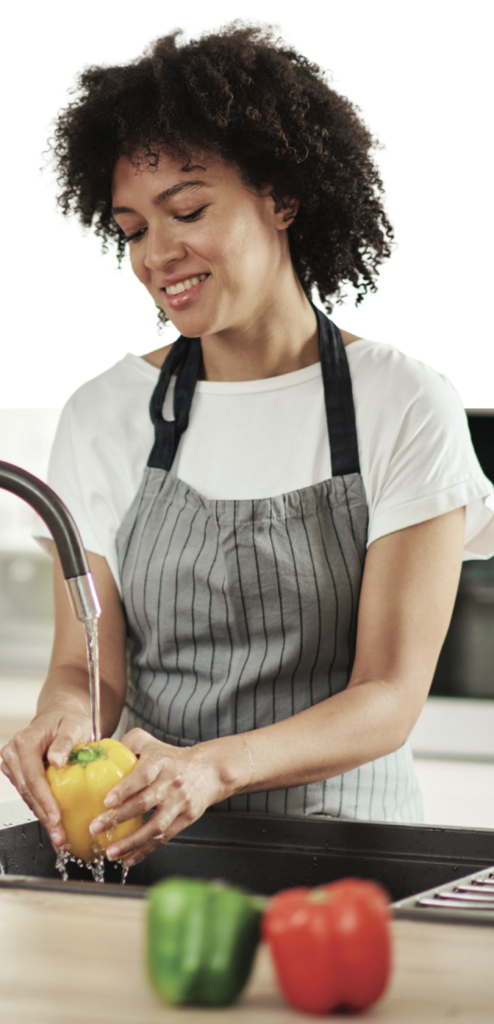
Foods that should always be washed include fresh fruits and vegetables. Fresh fruits and vegetables with an edible peel or surface need to be washed before consuming to remove bacteria, dirt and pesticide residue. Fruits and vegetables without edible peels also need to be washed thoroughly under running water. For example, rinsing bananas for 30 seconds as soon as you get home removes bacteria, chemical residues and fruit fly eggs that can hatch as the fruit ripens. Washing the fuzzy skin on a kiwi before cutting and peeling it removes dirt, bacteria and germs that were on the skin from transferring to fingers, knives and cutting boards.
Fruits and vegetables can be washed thoroughly under running water. Do not use soap when washing fresh produce as the soap may be absorbed into the food. Dry the produce with a clean cloth or paper towel to reduce any surface bacteria.
It is also good practice to wash the lids of cans and jars before opening to prevent bacteria and other harmful particles from falling into canned foods and beverages.
COOKING
Always cook food to a safe minimum internal temperature to prevent foodborne illness. Cooking food to the proper temperature will ensure that any harmful bacteria in the food are killed. Food temperatures should be measured using a food-grade thermometer.
Measure the temperature of foods at the thickest part of the food. For example, when measuring the temperature of a steak, pierce the thickest part of the meat to check the internal temperature. When using a digital thermometer, wait about five seconds when measuring the temperature of a food.
MINIMUM INTERNAL TEMPERATURES:
- Beef, chicken, ham, turkey: 165°F
- Fish: 145°F
PREPPING
Food preparation can be a major source of foodborne illness due to cross-contamination. According to the United States Department of Agriculture, cross-contamination is defined as the transfer of harmful bacteria to food from other foods, cutting boards and utensils.
When preparing food, keep raw foods away from other foods to avoid cross-contamination. For example, raw chicken should not be prepared next to fresh vegetables. You should use separate cutting boards for raw foods and other foods. Or you can prepare all the fresh foods first and then prepare raw foods with the same cutting boards and utensils. This method can minimize the number of dishes needed to prepare food.
After preparing raw foods, wash all cutting boards, utensils and surfaces with hot, soapy water. Any packaging for raw foods should be disposed of immediately and not reused.
STORING
Any leftover foods should be stored safely as soon as possible, minimizing the amount of time foods are left out at room temperature to reduce risk of bacteria growing on the food. Do not leave food at room temperature for more than two hours. If the air temperature is above 90°F, use food within one hour. If food is left out for longer than two hours at room temperature, dispose and do not eat or store for later use.
Package foods in sealed containers and store leftover foods at a temperature below 40°F. Use or freeze leftovers within four days of when the food was first cooked. When freezing food, ensure the freezer is set to 0°F or lower.
Always store raw meat on the bottom shelf of the refrigerator so it does not drip onto other foods. Try not to overcrowd refrigerators and freezers to allow for proper air circulation.
FOOD SAFETY RESOURCES
Looking for more information on food safety? Check out the resources listed below.
- United States Department of Agriculture: www.USDA.gov
- Food and Drug Administration: www.FDA.gov
- Food Safety: www.foodsafety.gov
- National Restaurant Association: www.restaurant.org