
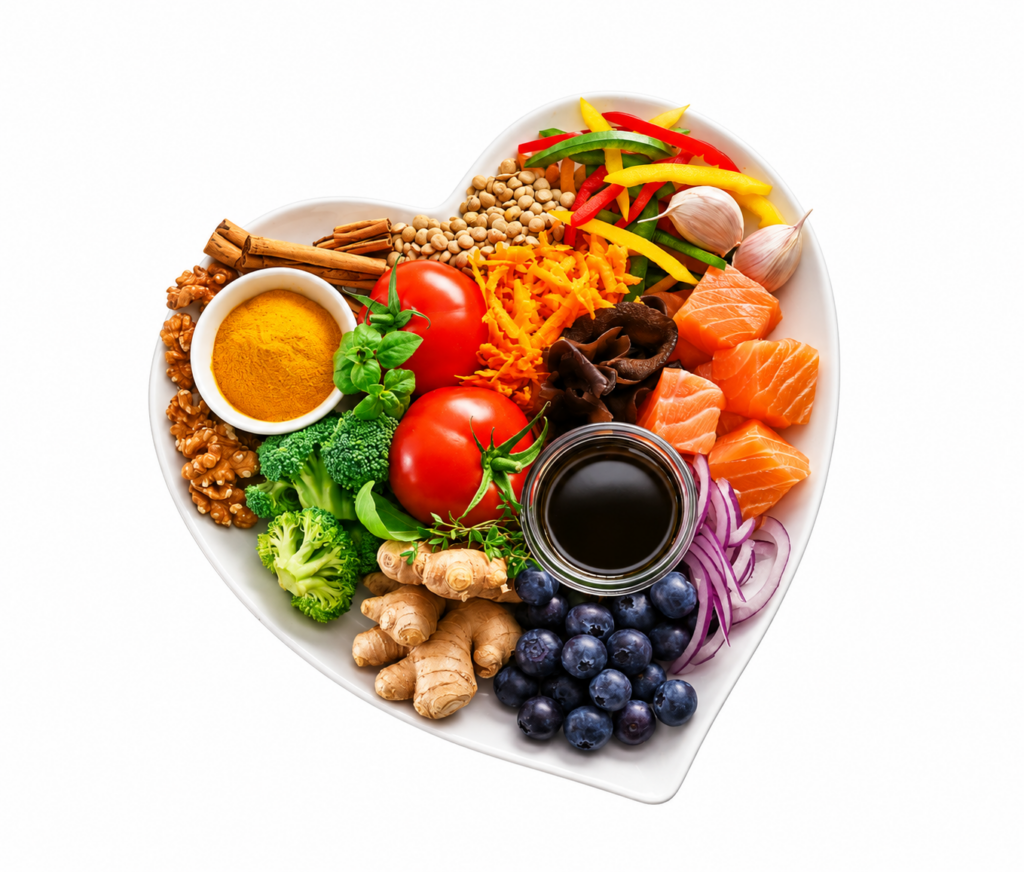
Heart Healthy Lifestyle
By Kristen Howard MS, RD, LD & Mary Linneman RD, LD, CDCES
Heart Disease is one of the leading causes of mortality and morbidity in America. Many of the factors related to heart disease are lifestyle factors such as dietary patterns and physical activity.
Sodium
Salt is a blend of two different minerals—sodium and chloride. According to the American Heart Association, reduced sodium intakes can lower blood pressure and cardiovascular disease risk. High sodium foods include processed foods such as canned soups and frozen meals. One teaspoon of salt contains about 2,300 milligrams (mg) of sodium. Be cautious when choosing food items labeled as “unsalted,” “no salt added,” “reduced sodium,” or “lower sodium.” These food items may still be high in sodium, so always check the nutrition label.
Recommendations: Aim for about 2,000mg (2 grams) of sodium or less per day. When cooking at home, leave salt out of recipes and instead use fresh herbs, spices or powders, like garlic powder or garlic salt. Choose foods that are naturally low in sodium such as fresh or frozen fruits and vegetables (without added sauces) and fresh meats versus processed meats. Also, when shopping, look for food packages that say terms such as:
- “Salt-free” or “sodium-free” (5 mg of sodium per serving or less)
- “Very-low sodium” (35 mg per serving or less)
- “Low Sodium” (140 mg per serving or less)
Fats
There are several different types of fats that exist in foods. We need fat for a variety of different reasons in our bodies. Fats support brain function and help with the absorption of fat-soluble vitamins (Vitamins A, D, E and K). Some fats tend to be less healthful for the cardiovascular system, while others can be beneficial.
- Trans Fats: Trans fats are the most harmful type of fats and contribute significantly to the development of cardiovascular disease. Trans fats may still be present in small amounts in foods either naturally like they are in animal products such as whole milk, cream, meat and meat byproducts, and in small amounts in baked goods. Check ingredient lists for the words “Partially hydrogenated” followed by any type of oil; if listed, the product contains some artificial trans fats.
- Saturated Fats: Saturated fats contribute to the build-up of plaque in the arteries, increasing the risk of heart attack and stroke. Saturated fats are typically high in animal sources such as meats, cheeses and dairy products. Coconut oil is also high in saturated fat.
- Unsaturated Fats: Unsaturated fats can help to reduce the risk of cardiovascular disease. Unsaturated fats are typically found in fish, nuts and seeds. There are subtypes of unsaturated fats like polyunsaturated fats (e.g. nuts, seeds and oils), monounsaturated fats (e.g. peanut butter and avocado) and omega-3 fatty acids (e.g. salmon and tuna).
Recommendations: Limit saturated fats to less than 6% of total caloric intake, or less than 13 grams per day. Limit trans fat as much as possible.
Cholesterol
Cholesterol is ONLY found in foods from animals; all plant-based foods are void of cholesterol. Foods high in cholesterol include egg yolks, meats and dairy products. However, cholesterol found in foods does not directly raise cholesterol in the human body. What affects cholesterol levels is saturated fat and refined carbohydrates (e.g. sugars). Below are further explanations about the different types of cholesterol.
- Low Density Lipoprotein (LDL) Cholesterol: Plaques that collect in the walls of arteries and increase the risk of stroke and heart attack. Also referred to as “bad” cholesterol. LDL is directly related to dietary saturated fat intake.
- High Density Lipoprotein (HDL) Cholesterol: Helps cells regulate LDL storage and helps to rid LDL accumulations. HDL can help to lower stroke and heart attack risk. Also referred to as “good” cholesterol. HDL is directly related to physical activity level.
- Triglycerides (TG): Triglycerides are a stored form of fat. Triglycerides are often high when blood sugar is high because the body converts excess sugars in the blood into triglycerides. TG is directly related to refined carbohydrates like sugar.
Fiber
Fiber can help to bind up the “bad” cholesterol and excrete it from your body before it builds up in the arteries. Fiber also helps to slow down the speed at which food is digested. Delayed digestion can help to control blood sugar levels and the feeling of being full for longer periods of time. Rich sources of fiber include:
- Whole fruits, including apples, pears and strawberries.
- Whole vegetables, including broccoli, carrots and Brussel sprouts.
- Nuts and seeds, including almonds, walnuts and flaxseeds.
- Beans and lentils, including black beans, navy beans and red lentils.
- Whole grains, including 100% whole wheat bread, brown rice and oatmeal.
Recommendations: The amount of fiber recommended for adult women is about 25 grams per day and fiber recommendations for adult men is about 30 grams per day.
Diets
Many dietary patterns of eating exist in our food ecosystem. Some “fad” diets may not be a healthy choice. Some examples of heart-healthy diets include:
Dietary Approaches to Stop Hypertension (DASH) Diet: Designed to lower blood pressure and improve heart health. The DASH diet emphasizes whole vegetables, fruits, whole grains, low-fat dairy products, fish, poultry, beans, nuts and vegetable oils. The DASH diet limits foods high in saturated fats like fatty meats, full-fat dairy products and tropical oils such as coconut and palm oils. The DASH diet also limits sugar-sweetened beverages and sweets.
When following the DASH diet, it is important to choose foods low in saturated and trans fats. Foods rich in potassium, calcium, magnesium, fiber and protein are also important.
Lastly, foods lower in sodium are critical when following the DASH diet.
Mediterranean Diet: Emphasizes plant-based foods and heart-healthy fats. The Mediterranean diet is linked with reduced risk of coronary artery disease. The diet consists mostly of fruits, vegetables and whole grains. The main source of fat in the Mediterranean diet is extra virgin olive oil and fatty fish, like salmon. Little to no red meat is recommended when following the Mediterranean diet. Moderate amounts of natural cheeses and yogurts are also included in this diet.
Movement
Physical activity is critical in a heart-healthy lifestyle. Try to move your body most days of the week. General physical activity recommendations include a minimum of 150 minutes of moderate-intensity exercise a week, or 75 minutes of high-intensity exercise each week, and two sessions of muscle-strengthening exercises a week. Engage in physical activity that is enjoyable to you and try being physically active with a group of friends or family members.
Easy Swaps
When implementing a heart-healthy diet, there are some simple switches that can be made to dietary patterns.
- Instead of regular ground beef, try 90% lean ground beef or lean ground turkey to decrease calories and saturated fat.
- Instead of sour cream, try low-fat Greek yogurt to decrease calories and saturated fat.
- Instead of butter or margarine, try using olive oil, canola or safflower oil. The amount used can also be decreased to lower the calories and increase unsaturated fat.
- Swap out snack foods like crackers, chips and candy for yogurt with fruit, fresh vegetables and hummus or unsalted nuts to decrease sodium and saturated fat.
- Switch out processed lunch meats like bologna, salami and pastrami for low-sodium turkey or roast beef to decrease total fat, saturated fat and sodium.
Resources for Recipes
Need more guidance? Talk to a Registered Dietitian or reference the websites listed below.
- American Heart Association: heart.org
- American Diabetes Association: diabetes.org
- Academy of Nutrition and Dietetics: eatright.org