
The Importance of Stretching
By Jenny L. Workman, Community Wellness Manager
Stretching is one of the most overlooked components of wellness, yet national guidelines consistently highlight its value. The American College of Sports Medicine (ACSM) recommends performing flexibility exercises for all major muscle groups at least two to three times per week, holding each stretch for a total of 60 seconds to improve mobility and reduce stiffness. The American Heart Association (AHA) notes that flexibility work helps the body move more easily, supports posture, and reduces discomfort during daily activities or long periods of sitting. The Centers for Disease Control and Prevention reinforces that regular stretching supports functional movement and can help counteract the effects of sedentary behavior.
Stretching improves range of motion, enhances circulation, reduces muscle tension, and may help prevent injuries, making it a powerful complement to good nutrition and overall wellness. When paired with healthy eating, stretching supports metabolic health, mobility, and daily comfort.
1. Hamstring Stretch
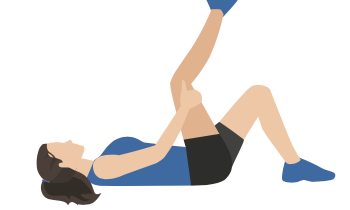
Why it matters: Your hamstring muscles are on the back of your thigh. Tight hamstrings contribute to low back discomfort and reduced mobility. AHA recommends hamstring stretching to improve flexibility in the back of the thigh and knee.
How to do it: Prop one foot on the floor (ideally with the heel down and toes up) on a low bench or step. Hinge forward from the hips and hold for 20–30 seconds. This stretch can also be done lying on your back with one leg up or sitting upright and gently tipping forward from the hips. Repeat for opposite leg. You can easily work this stretch into everyday moments, like while brushing your teeth, relaxing on the floor, or watching your favorite TV show.
2. Chest Stretch

Why it matters: Sitting for long periods tightens the chest and shoulders. AHA notes chest stretches help improve posture and reduce upper body tension.
How to do it: Stand in corner, place your forearms on the wall, and gently lean forward. You can also stand at a doorway with your hands on either side of the door and gently lean forward. Or this stretch can also be done by interlacing your hands behind you and drawing your shoulders back to open the chest. This stretch is perfect for the office, during a pause on a long road trip, or while you’re waiting for your hot beverage to finish brewing.
3. Hip Flexor Stretch
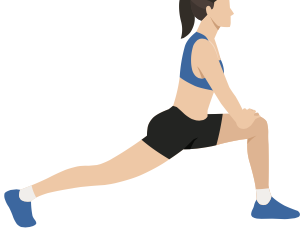
Why it matters: Hip flexors are a group of muscles near the front of our hips. Prolonged sitting and overuse from running or cycling can cause pain and tightness. AHA highlights hip flexor stretching as essential for mobility and balance.
How to do it: Step into a lunge with your feet hip-width apart. Keep your torso upright, and gently press your hips forward. You can also do this stretch from a kneeling position using the same cues or try a yoga pigeon pose for a deeper hip opener. Try stretching each leg a couple of times, holding for 10 to 20 seconds. This is an especially useful stretch after sitting for a long period of time or following a long walk.
4. Quadriceps Stretch
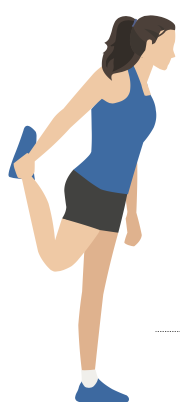
Why it matters: Our quadricep muscles are the muscles on the front of our thighs. Tight quadriceps can affect knee alignment and walking mechanics. AHA recommends quadricep stretches to improve thigh flexibility and support joint health.
How to do it: Stand near a wall or another stable surface if you need support for balance, bend one knee, and gently draw your foot toward your glutes. You can also do this stretch lying on your stomach or side if that feels more comfortable. Stretch both legs, holding each side for 10–20 seconds, and repeat twice. It’s an easy movement to fit into everyday moments, like after a bike ride, walking the dog, or even unwinding after a long movie.
5. Torso Twist
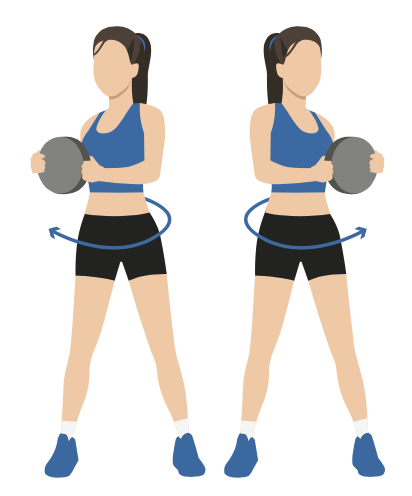
Why it matters: ACSM emphasizes stretching the trunk to maintain spinal mobility and reduce stiffness. AHA recommends torso twists to improve midsection flexibility and posture.
How to do it: Sit or stand tall, rotate gently from the waist, and hold for 10–30 seconds on each side, repeating a couple of times. Keep your spine lifted and your shoulders relaxed throughout the movement. Holding an object can add resistance which can help increase core strength and helps maintain proper form. You can do this first thing in the morning, sitting at your desk chair, from your recliner or sitting through a long meeting.
One additional point worth highlighting: I’ve started incorporating neck stretches because so many of us spend long hours on computers or looking down at our phones. Over time, this creates tightness that limits mobility. Without full range of motion in the neck, even simple daily tasks, like turning your head while backing up your car can become more difficult. Gentle, consistent stretching helps counteract these modern day posture challenges and supports safer, more comfortable movement.
To make an appointment with a physical therapist, visit boone.health/therapy-services or call 573-815-3868.