
From the Label to the Table
By Logan Bradley, MS, RDN, LD
A food label is the information displayed on or attached to a food package. It provides crucial details about the product, including nutritional value, ingredients, expiration dates, and allergen warnings, allowing consumers to make informed, healthy choices.
2016 Label Update
In 2016, the FDA updated the food label for first time in 20 years. This update reflected more current scientific understanding of diet and health.
The update modernized how nutritional information is displayed, to help consumers make healthier choices. Some key changes included larger “Calories” text, a new “Added Sugars” line, realistic serving sizes, and updated micronutrient requirements (listing Vitamin D and Potassium while dropping Vitamins A and C).
Four Components of Food Label
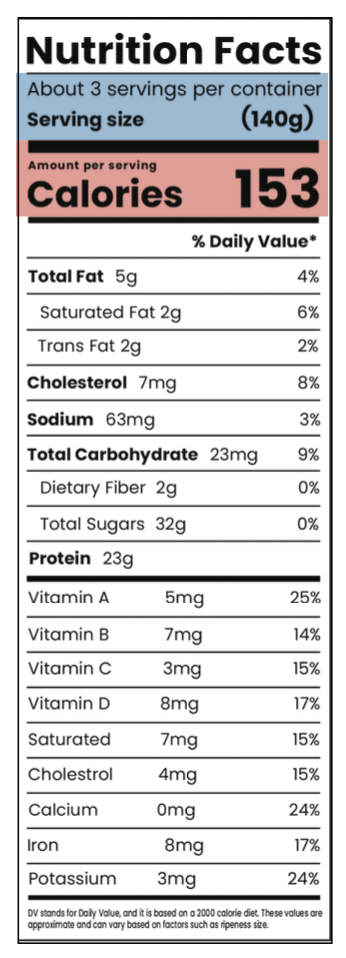
There are four components of a food label: serving size, calories, nutrients and percent daily value.
1. Serving Size
A common misconception is that patients believe the serving size on a food label is the dietary recommendation for the food or drink being consumed. In reality, the serving size on a food label simply indicates the amount of food or drink people typically consume in one sitting. It is not a dietary recommendation. The remaining nutritional values (calories, fats, carbs, etc.) from the food label are based on this specific serving size amount, making it that much more important to check the total servings per container.
Serving sizes are first put in standardized units (cups, pieces) and then metric amount (number of grams).
2. Calories
The calories listed in the amount per serving provide a measure of how much energy is contained in one serving size.
To accurately track intake using a food label, always check the serving size and servings per container at the top of the label. The listed calorie count applies only to the exact serving size. Consuming more than the stated serving size will increase calories and nutrients accordingly.
To achieve a healthy body weight, aim to balance calories between food and drinks. Usually, 2,000 calories are recommended for general guidelines. However, calories vary depending on a variety of factors such as age, sex, height, weight, and physical activity. Consistently consuming more calories than the body burns is the primary driver of weight gain.
3. Nutrients
The food label will show key nutrients that impact health. Look for foods that contain more of the nutrients that are good for the body.
Nutrients the body needs include calcium, dietary fiber, iron, potassium and Vitamin D. Simultaneously, nutrients that should be limited include saturated fat, sodium, and added sugars.
When shopping, compare labels on different brands of similar products and choose foods with the better proportions of these nutrients.
4. Percent Daily Value
The Percent Daily Value (%DV) on a food label shows how much a single serving of food contributes to the recommended total daily intake of a specific nutrient. This percentage is based on a general 2,000-calorie diet.
The %DV can help determine if a serving of food is high or low in a nutrient. As a quick rule of thumb, 5% or less is low, and 20% or more is high.
Total Sugar vs. Added Sugar
The 2016 FDA food label update included “Added Sugars” to help consumers identify foods high in added sugars to reduce the risk of chronic diseases, such as obesity, diabetes and heart disease. According to the U.S. Food and Drug Administration, scientific evidence from the 2015-2020 Dietary Guidelines for Americans suggested excessive consumption of added sugars makes it difficult to maintain nutrient-dense diets while staying within daily calorie limits.
- Total Sugars on the food label include sugars naturally present in many nutritious foods and beverages, such as sugar in milk and fruits as well as any added sugars that may be present in the product.
- Added sugar refers only to sweeteners like cane sugar, syrups, or honey added by manufacturers. The main sources of added sugars are sugar-sweetened beverages, baked goods, desserts, and sweets.
Health guidelines strongly recommend limiting added sugars (aim for under 10% of total daily calories), as they provide empty calories without necessary vitamins or fiber.
Ingredients List
By law, ingredients must be listed in descending order by weight, meaning the ingredient that makes up the largest portion of the food is listed first, and the smallest is listed last.
Labels are also required to clearly declare the presence of major food allergens, like milk, wheat, or nuts.
Whether you’re new to looking at food labels, or a seasoned pro, knowing what you are consuming is the ultimate goal.